I was all set to commit to blogging regularly, but then life happened (as it always seems to). Abe started a new job working nights as an agriculture inspector. I started a new job as well. I still work for the same company from home, but the new position means a new boss, new team, and more responsibility.
When Abe is working nights and I start work at 6am, we have less than one waking hour together. Spare time has been spent gardening like crazy, working on the house like crazy, and running around after a very active 1 ½ year old (you guessed it) like crazy.
The silver lining of Abe working nights is that I get quiet time after Gilbert goes to bed that I can use to get things done. I probably should do laundry and sweep the floors, but there are so many things I would rather do with a summer evening. The crumbs and dog hair that accumulate on the floor on a daily basis (you are welcome for that mental image) will have to wait.
Why? I am in full-on food preservation mode. This is the time of year when it is possible to take the wonderful produce of summer and preserve it for enjoyment all winter. I can clean the floor later…
In pursuit of that end, I picked up 20 lbs of Bing cherries for $1/pound from a roadside stand I found on Craigslist. Look at these beauties (and forgive my lack of photography skills):
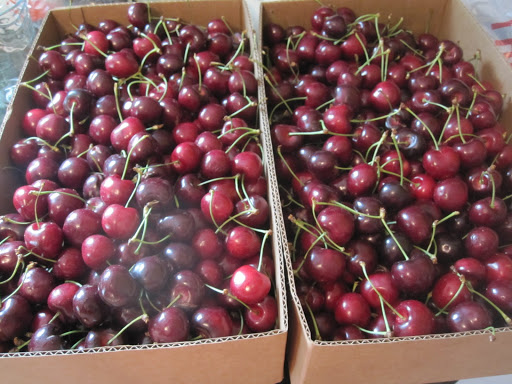
I have dehydrated, canned, and made jam from them. I’m going to pick up more to make spice cherry syrup. But more on that later…
Today is really about jam. This jam is something my Great Grandma made (or so I’ve been told) and my Dad has a particular weakness for. It is delicious and hard to find in stores.
Cherry Pineapple Jam
Yields 6 – 8oz jars of jam
You will need:
20oz can of crushed pineapple
3 cups chopped, pitted sweet cherries (I used bing)
3 tsp lemon juice
6 tbsp pectin
3 cups of sugar (adjusted up if cherries are a bit tart).
Step 1: Stem, wash, pit, and chop those cherries. These cherries were so big, that my (borrowed) pitter would not consistently pit them. I hand-pitted them and used a food processor to blend the cherries.
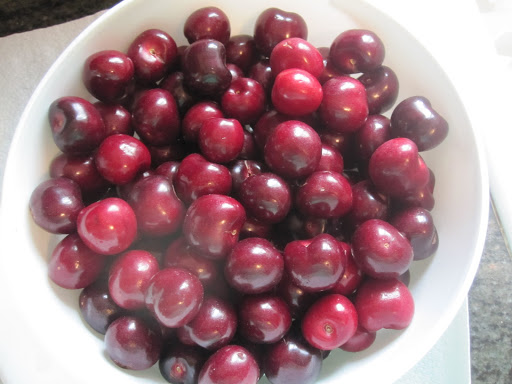 |
| Washed and stemmed |
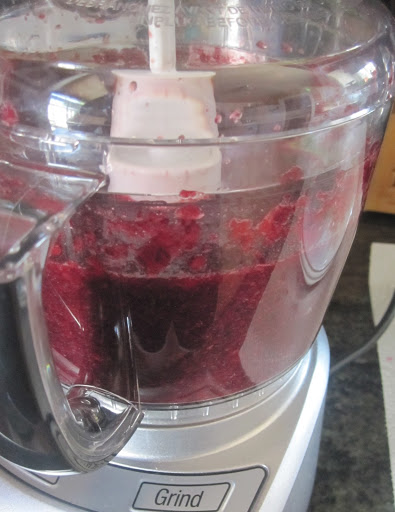 |
| Finely chopped in food processor – isn’t the color wonderful? |
Step 2: Mix cherries, pineapple, and lemon juice in a pan. Bring slowly to boil, mixing in pectin gradually.
Step 3: Once it is boiling, dump in the sugar. Stir constantly until sugar is incorporated. Let boil for one minute. Then remove from heat.
Step 4: For preserving, you have two choices: the traditional canning method or the freezer method. I did both.
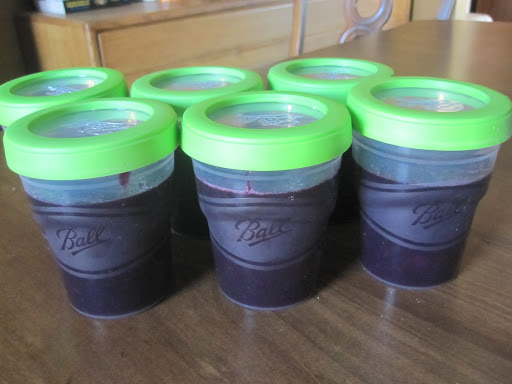
The Freezer Method
Wash your freezer containers thoroughly in hot soapy water. Ladle the jam into the containers, leave on counter to cool with lid off. You can let them cool up to two hours. Once the jam has set, put the lid on and pop them in the freezer.
The Traditional Method
Sterilize your jars and lids by boiling them for 10-15 minutes. Take the jars out of the water bath, line them up, and pour the jam in. Wipe the rims with a clean cloth (any debris on the rim could prevent the jar from sealing properly). Place the lid and ring on each jar and tighten.
Place in a water bath with 1-2 inches covering the top of the jars. Bring to boil and boil for 5 minutes. Remove from bath and set aside to cool completely. Try to avoid the temptation to touch them for 24 hours… it’s hard. I know.
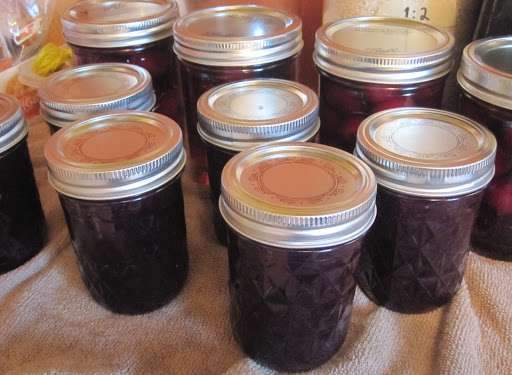
A few tips: Start sterilizing the jars before you start combining ingredients and they will be done when the jam is ready to be ladled in. Leave the jar lids in warm water until you are ready to use them. This ensures that they stay as clean as possible and don’t come into contact with a dirty surface before placed on the jars.
I like to set out everything I need in advance. Here is what my canning setup looks like:
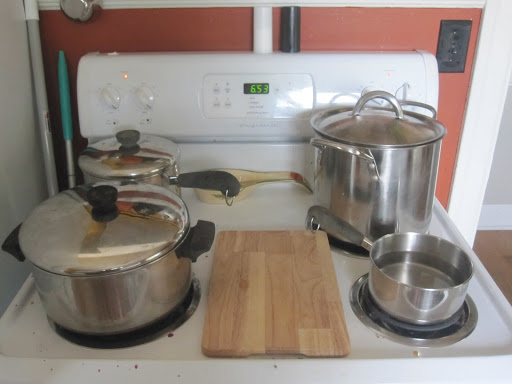 |
| Back left burner – jar sterilization. Back right burner – water bath. Front right burner – sterilize lids. Front Left burner – make jam. Middle – fill and cap jars. |
There is a semi-traditional method for canning fruit jams known as the “flip method”. It should not be used with any sort of vegetable canning. As far as I know it is not officially recommended by canning companies or the USDA, but I have used it with good results: You can use dry heat to sterilize the jars (ie. the oven at 350 for 10 minutes, but still boil the lids) and then skip the last water bath. Simply ladle the hot jam into the hot jars fresh out of the oven, put the lid on, finger tighten, and then flip the jars. Let them sit overnight until they pop/seal. Personally, I still use a water bath for sterilizing even when I skip the last water bath.
Glad to be back to blogging and hope to be sharing more with you all again soon!
 The Tiny Cottage
This looks delicious! It also looks like a lot of work. I've never done canning – it just looks hard.
LikeLike
It's way easier if you team up with a friend and then split up the results. Plus, you can sit and chat during the final water bath (which in some cases is a nice 20 minute break). I think I'm going to rope in Christina to can some peaches with me next week…
LikeLike
Lisa, the other things my friends and I have done in the past is divide and conquer. If I make two or three different things in a canning season, I can trade with 3 or 4 people who each did two or three things and end up with a fully diversified stocked pantry. Just make sure the people you trade with are using good fruit and have good technique.
Lindsay, this year I am introducing you to dilly beans! They are every pregnant woman (and non-pregnant woman's) dream!
LikeLike